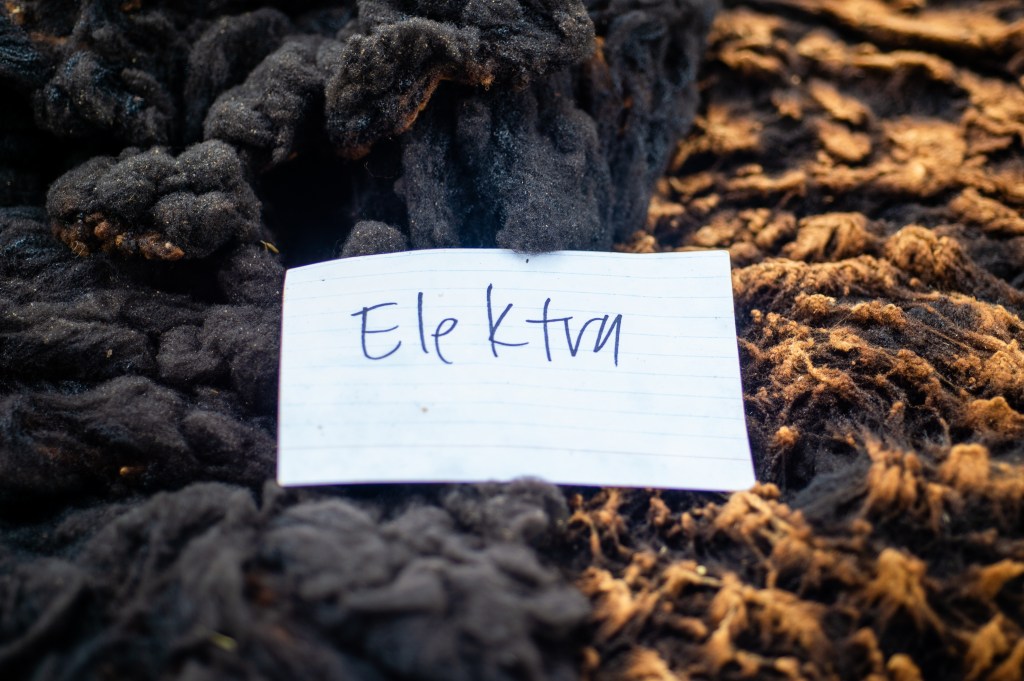
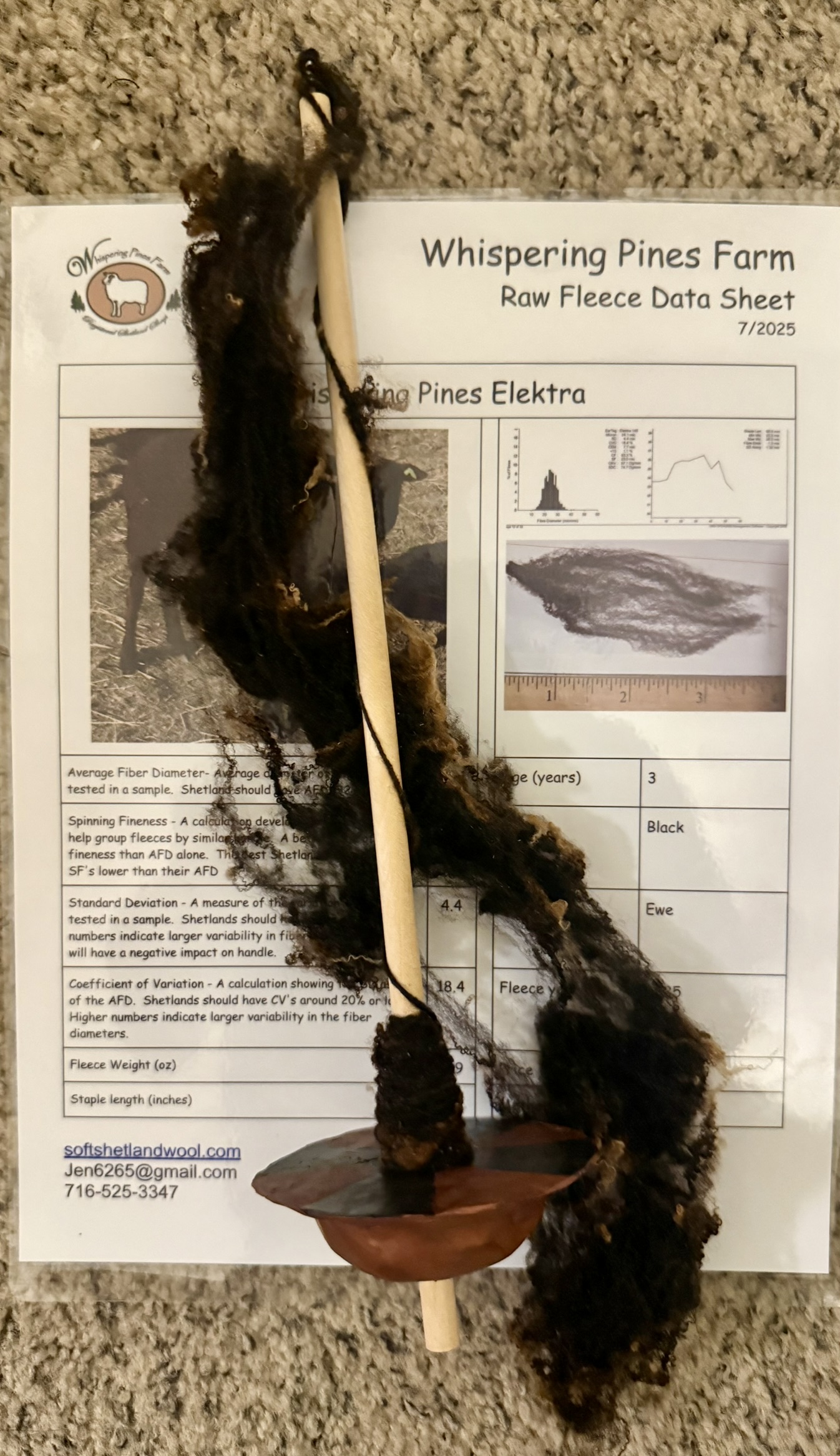
While visiting the Whispering Pines Farm website to purchase my new Aura spinning wheel (see previous post), I stumbled upon the farm’s 2025 fleece auction. By the time the auction ended on August 3, I had became completely obsessed with all things fleece and sheep. And, I just had to have this gorgeous raw fleece, rooed from a 3-year-old Shetland ewe named Elektra.
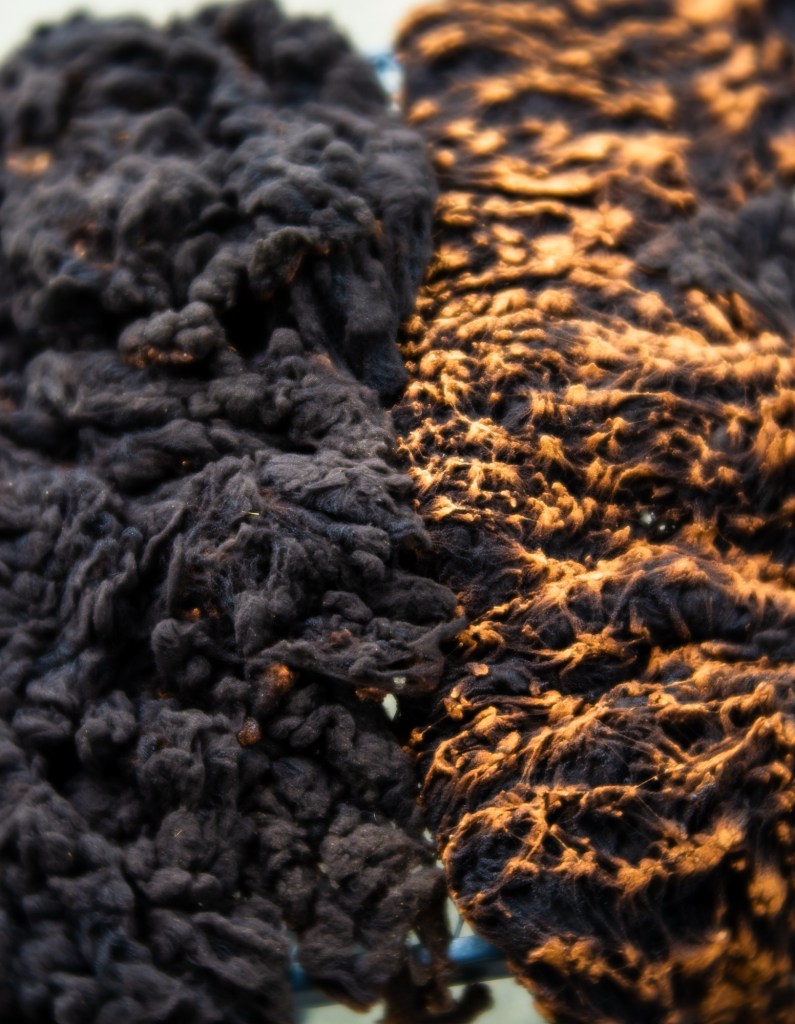
In the week that it took for the fleece to travel from New York state to the gulf coast, I watched at least a dozen YouTube videos on scouring raw fleeces and a good number on fiber prep too. But, what had me most excited about the fleece was watching the video of Jen of Whispering Pines doing nothing in the way of fiber prep but flick carding locks. That’s when I decided I wanted crazy, lumpy yarn with tip spirals sticking out.
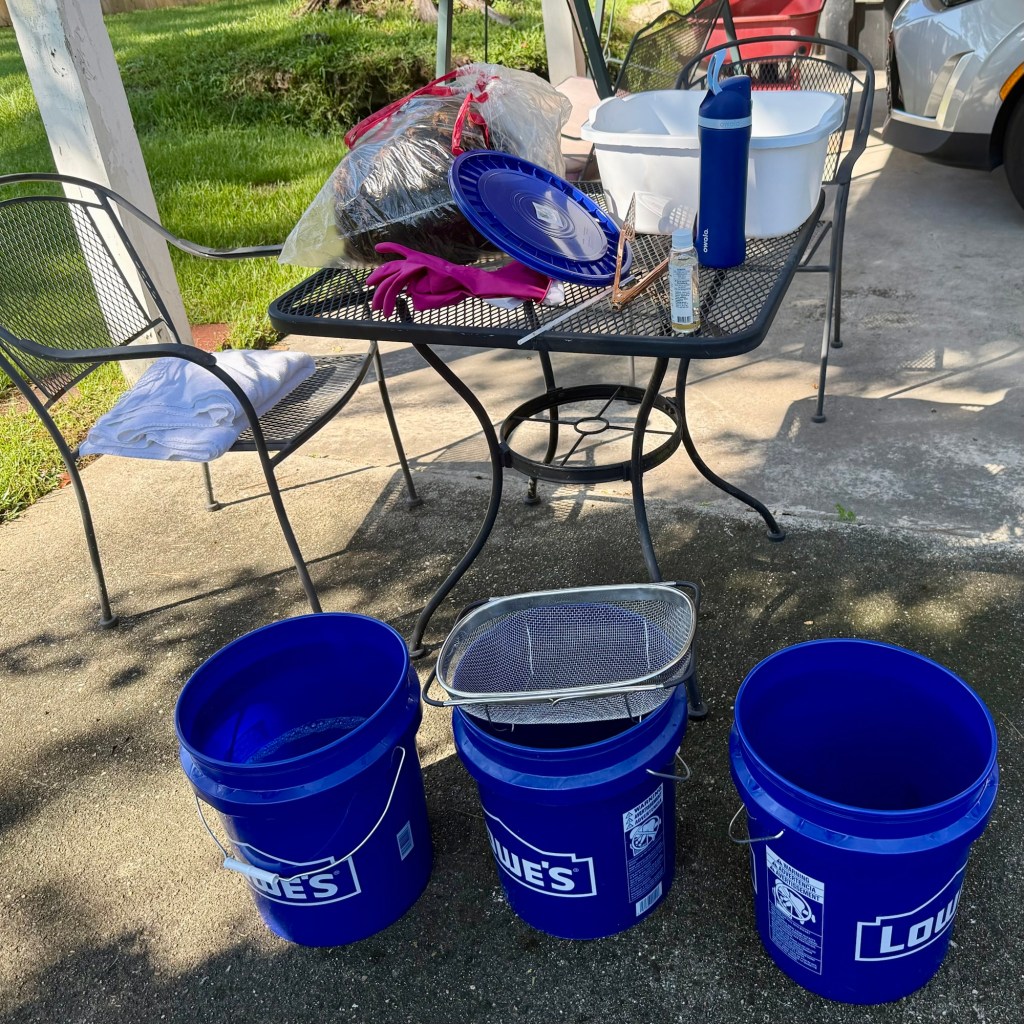
Once the fleece arrived in the mail August 11, I started gathering supplies for the scouring. And this Saturday morning, five long days after the fleece arrived, I finally got ready to do the thing. Armed with my film processing thermometer, some Unicorn Power Scour, and a favorable weather forecast, I grabbed three buckets and set to the task.
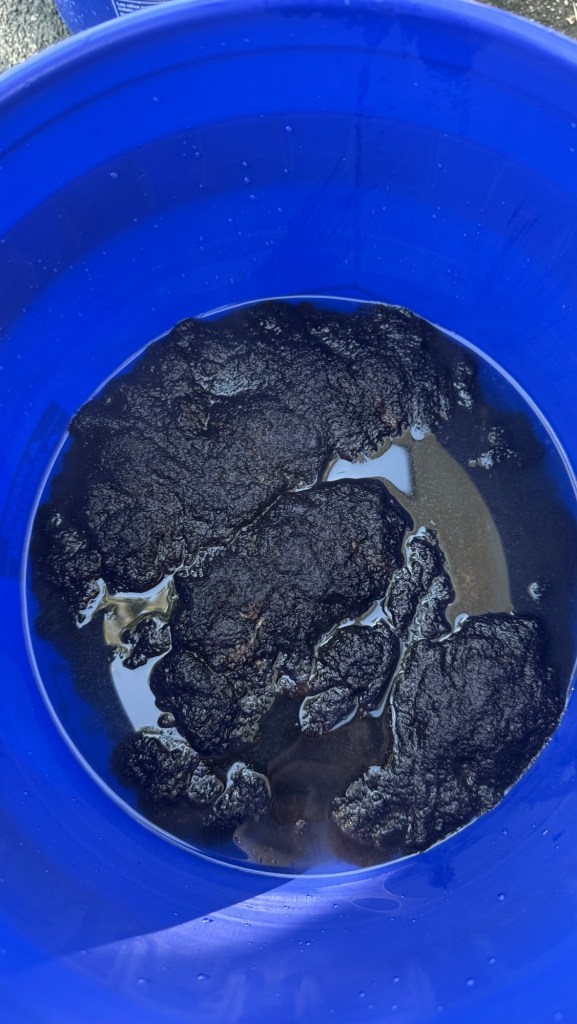
First Half on Saturday
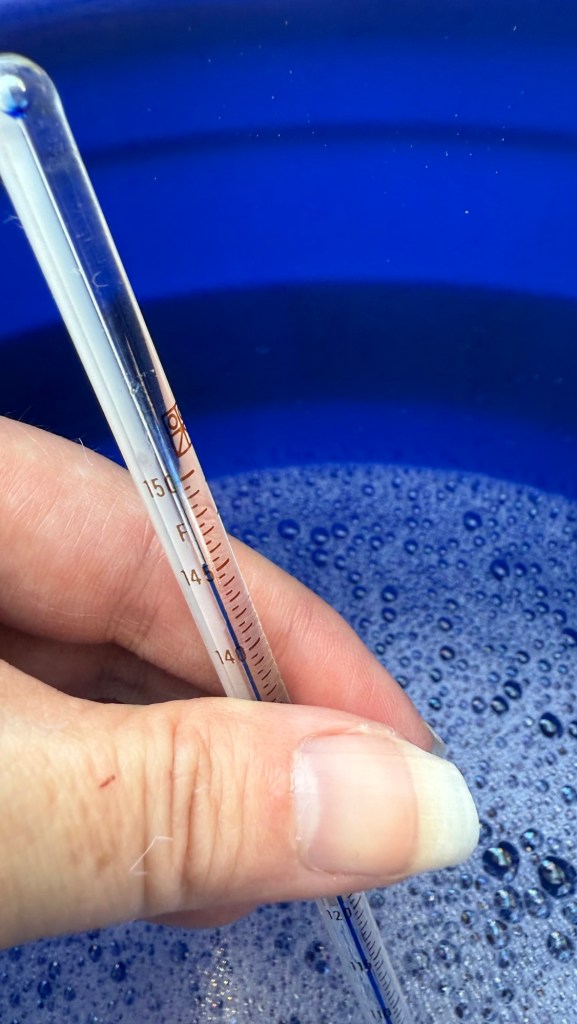
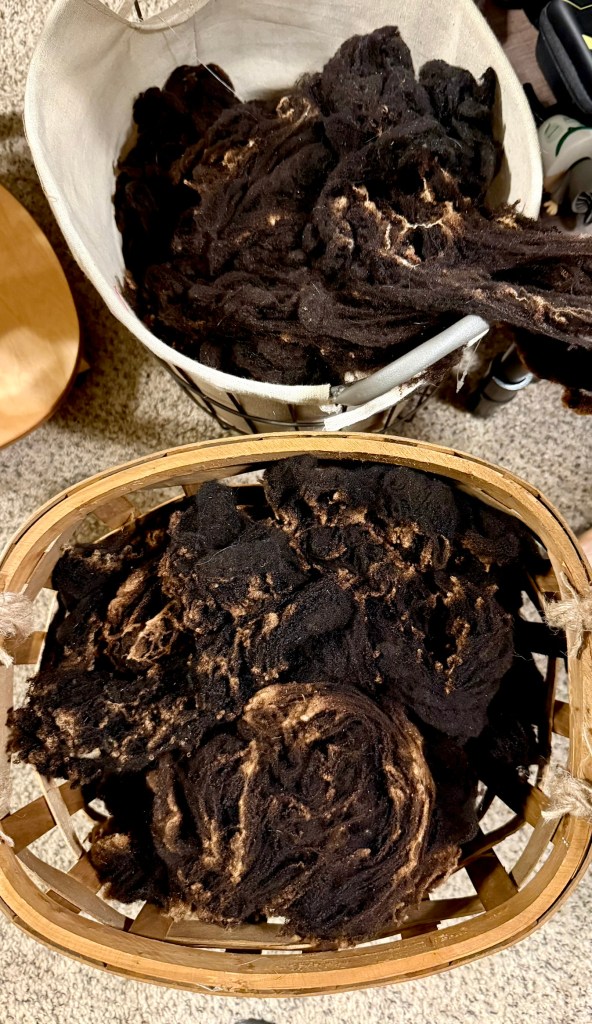
Saturday morning started off at about 88% humidity because of the previous day’s rain and about 84°F by the time I dragged myself out of bed and outside around 9 o’clock. Swayed by all those who say not to use bags because the fleece needs to breathe, I forwent (which is apparently a real word) the delicates bag. Using tap water at 125°F with some boiling water thrown in, I completed 2 washes and 2 rinses using Unicorn Power Scour at around 135°F–145°F. I did my best to try to keep the lock structure by lifting the entire quantity of wool at once between buckets, but that did pretty much nothing good. By the time I was done scouring and rinsing, the ambient temperature was up to 92°F, and the humidity down to 64%. This first fleece half took about 6 hours to dry completely.
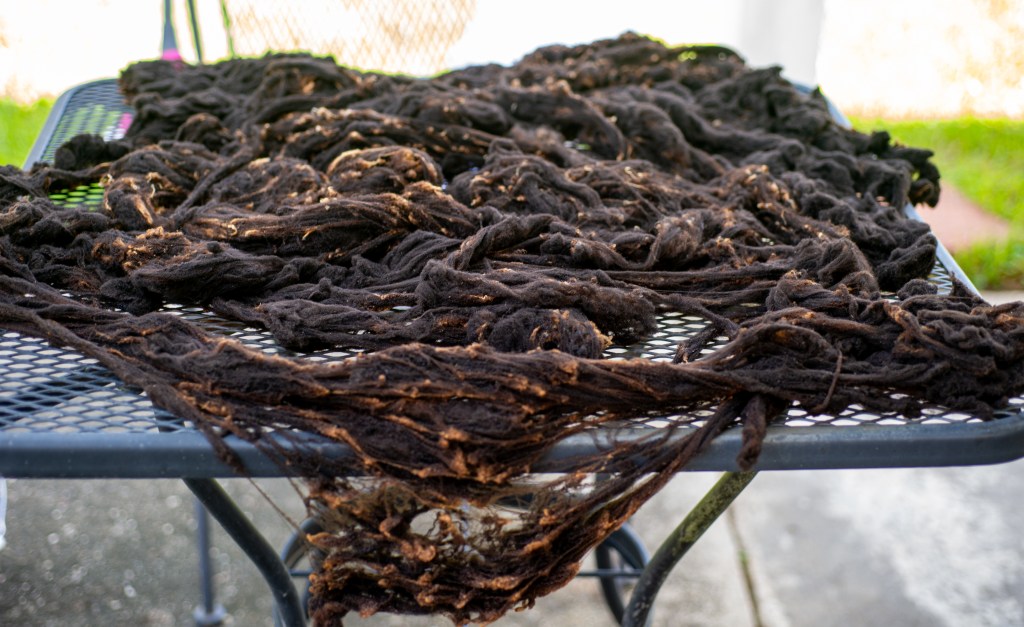
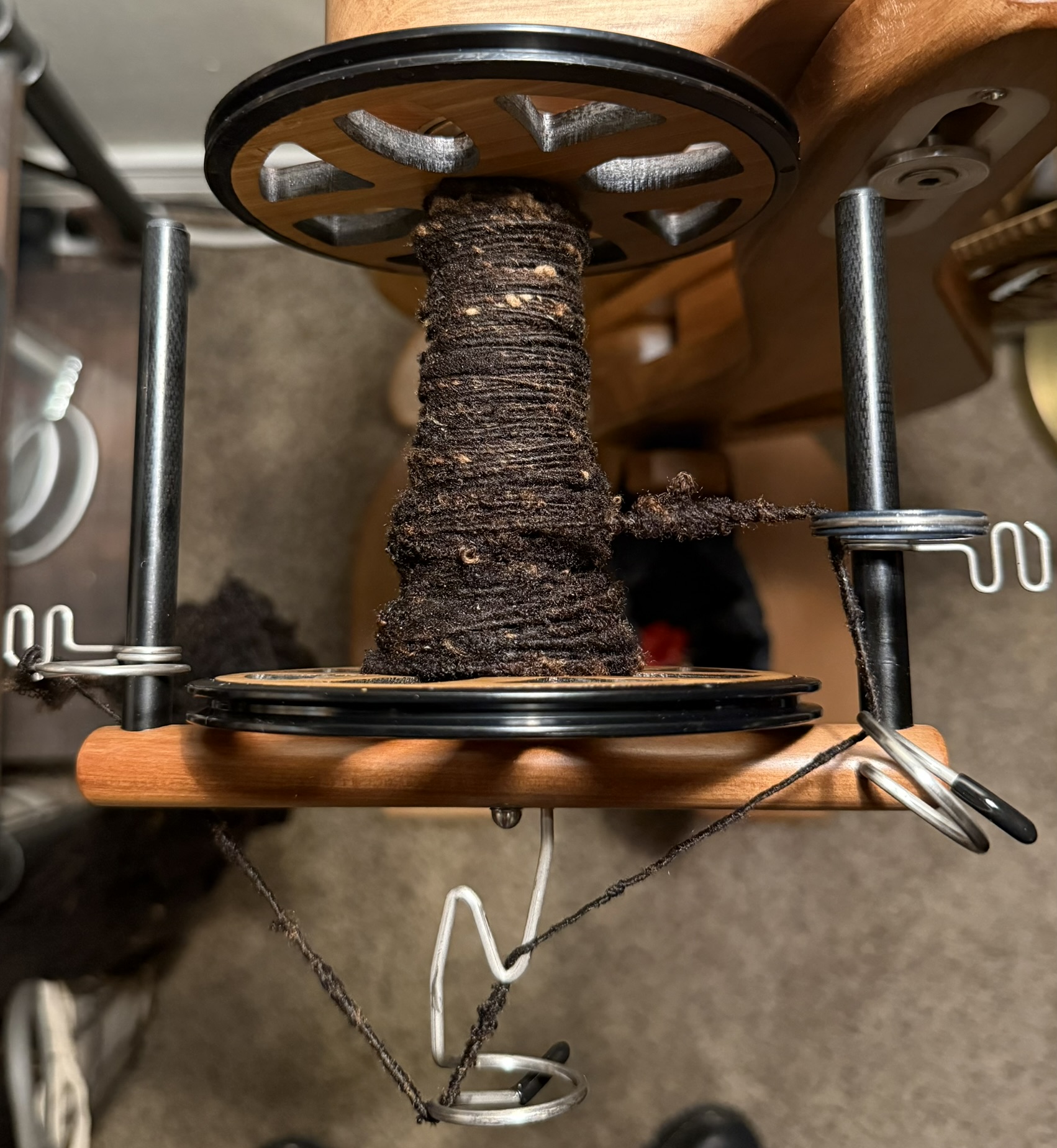
But most of the wool was dry far sooner, so I grabbed a dry piece for a sample and took it to my wheel for a spin. Apparently, there’s a name for this minimal fiber prep, and it is called spinning from the cloud. I am now officially in a relationship with it.
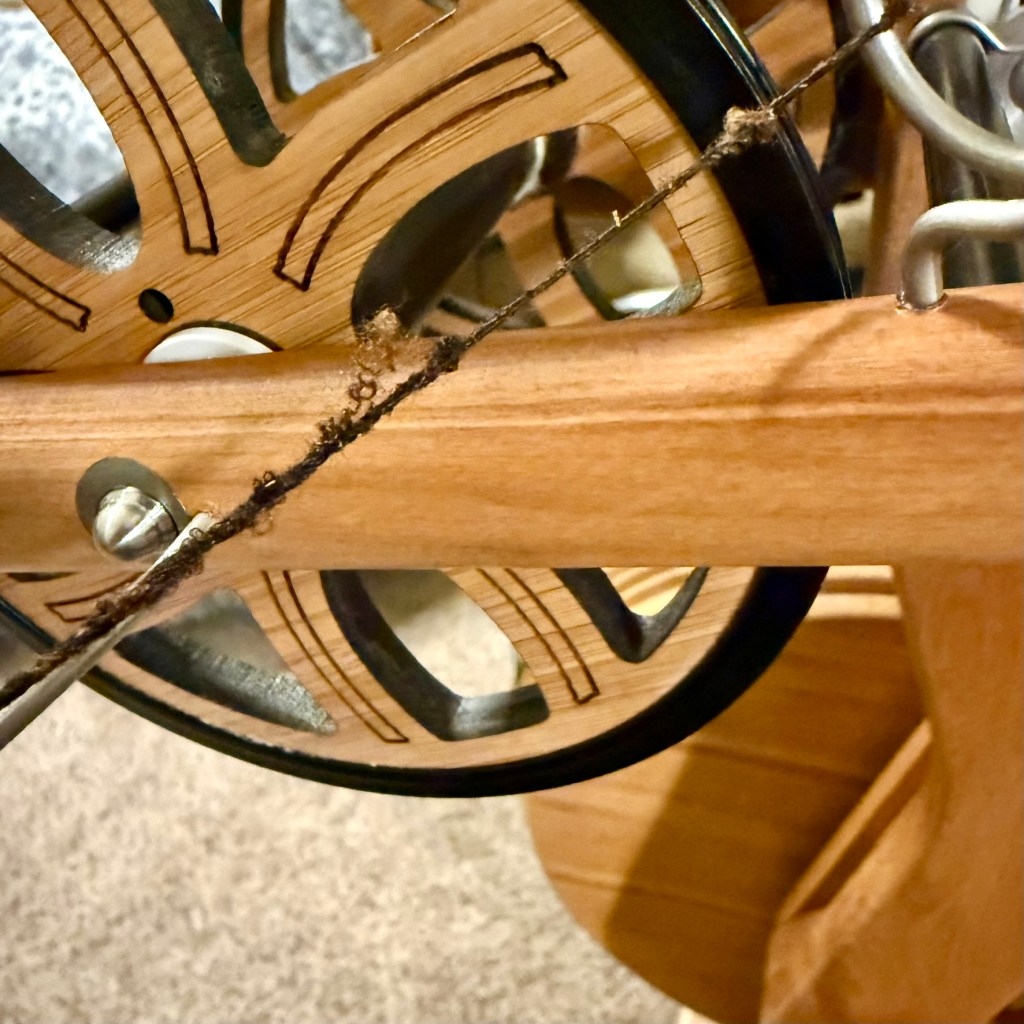
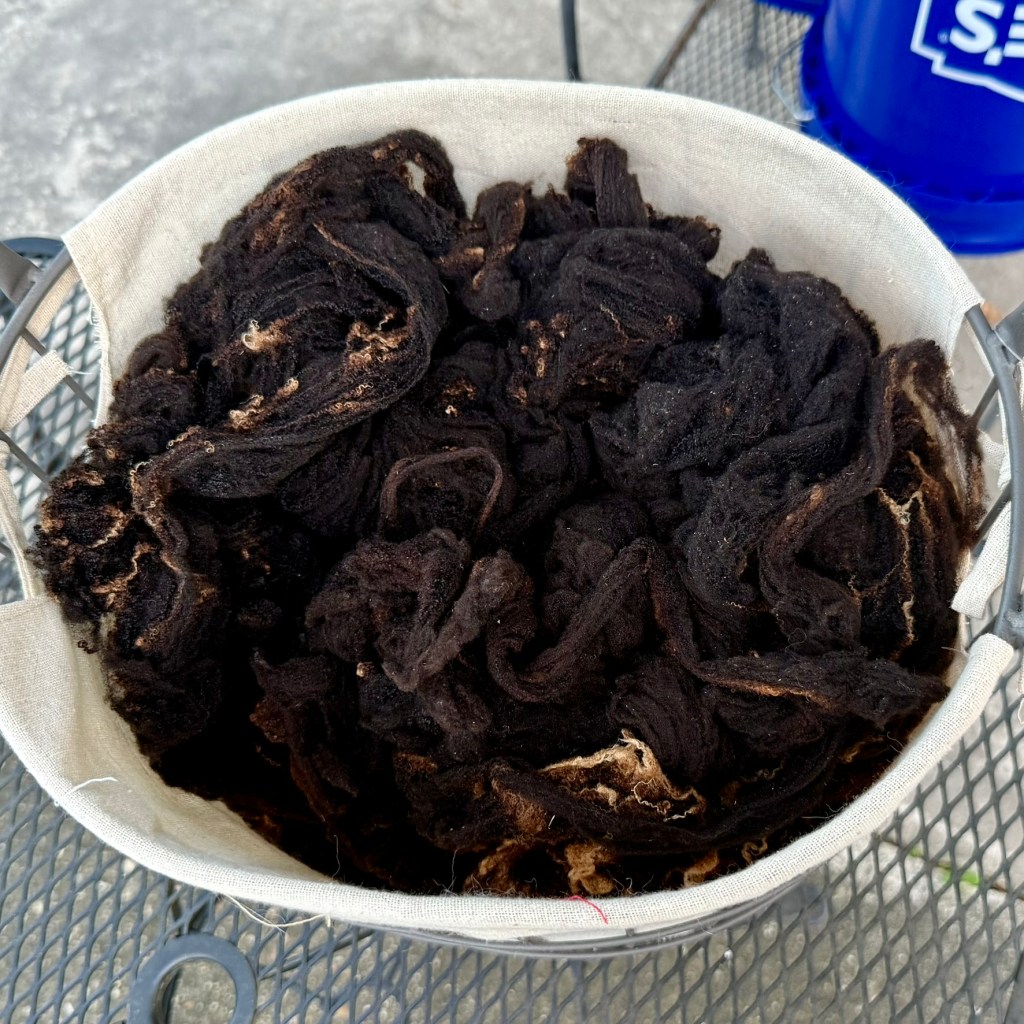
Because of the forecast of rain on Sunday, I had initially intended to wait for another weekend to scour the second half of the fleece, but I was so thrilled with the outcome, despite the loss of the lock structure, that I decided to scour the rest Sunday morning and bring it inside to fully dry in the case of afternoon rain showers. I used the same setup as the day before, but tried to get the water hotter because there was still some lanolin in the fleece. I am used to commercially produced top and roving, which is dry as a bone. So, I have no idea how much lanolin is ok, but I had only done 2 scours on the first half and thought that maybe I needed to scour at least 3 times and use consistently hotter water.
Second Half on Sunday
The previous day had been so exhausting, ferrying hot water out of the house to the impromptu scouring station and empty containers back inside, that I wasn’t sure I’d actually get out of bed and outside early enough for the job. But, I managed it. Sunday morning was just as warm as the morning before but slightly less humid (62%) because the moisture from Friday afternoon’s rain had finally evaporated (well, from the concrete, anyway).
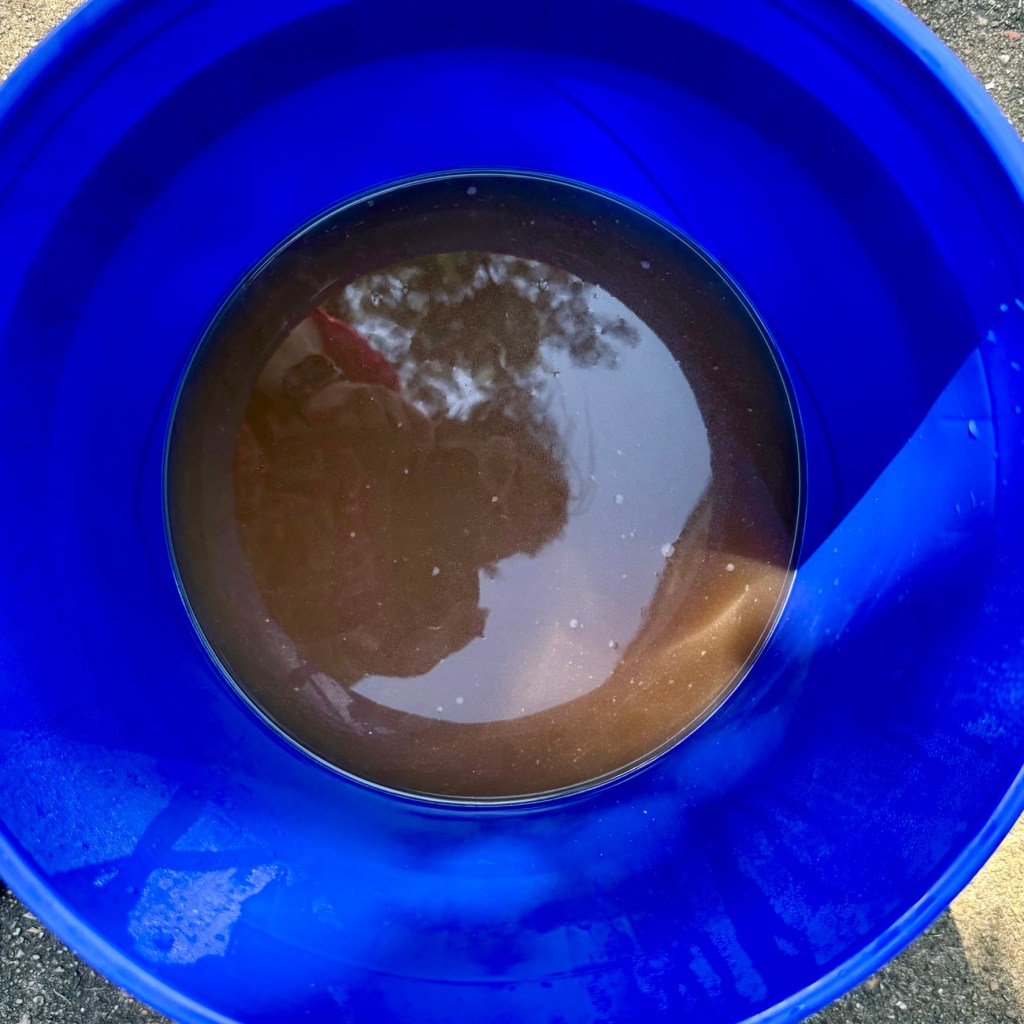
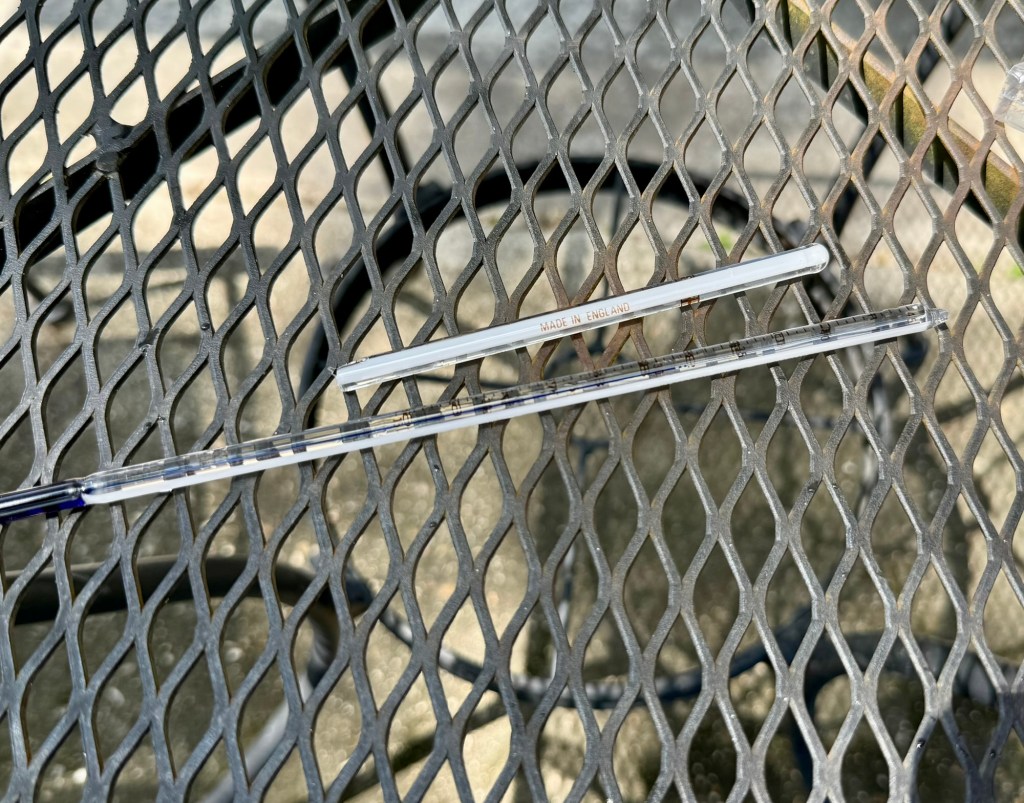
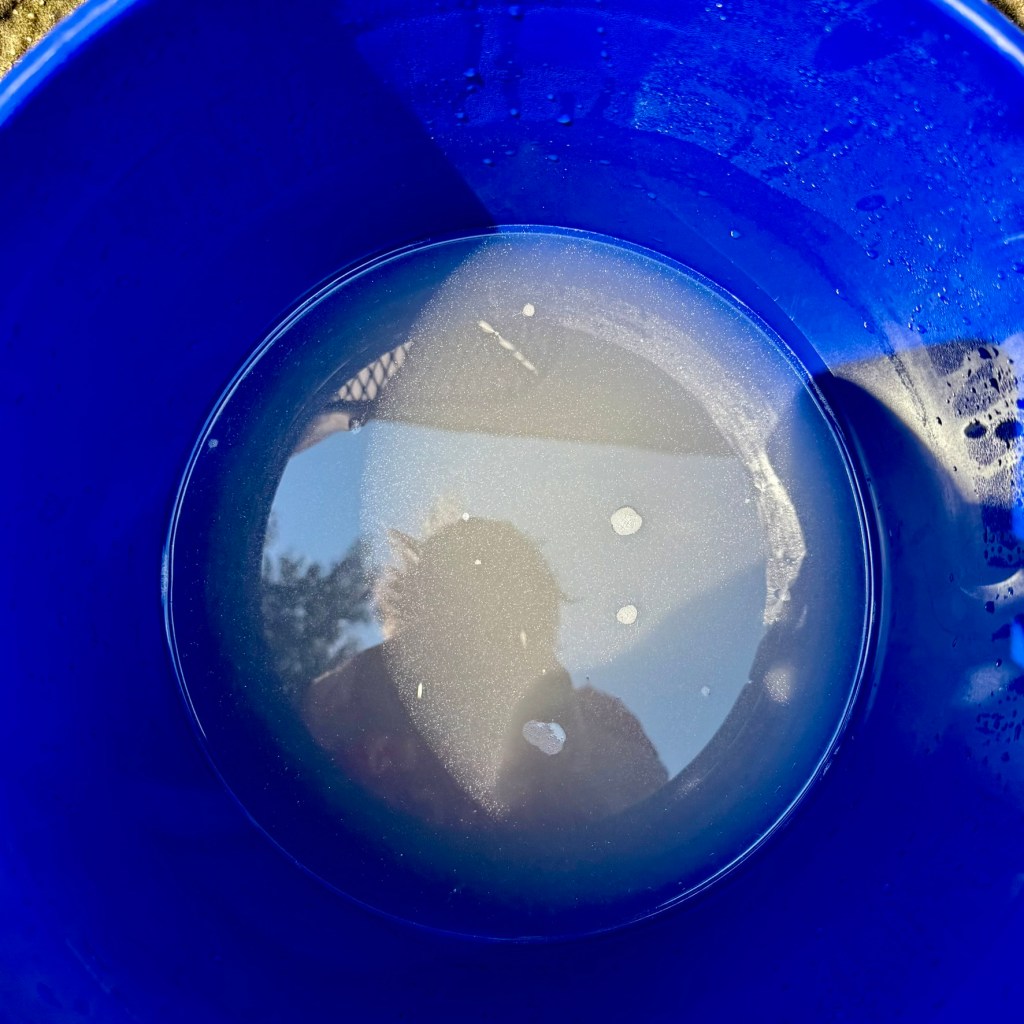
With a less precise but hotter and also less arduous water-providing system, I went for 3 scours and 3 rinses this time. Like the day before, each scour and each rinse was timed at 15–20 minutes. I set two timers, one for 15 minutes, after which I would begin prepping the next step, and one for 20 minutes, by which I was starting the next scour or rinse, whichever was next. The water temperature was between 140°F and possibly 160°F—which was the max temp of my film processing thermometer before it broke.
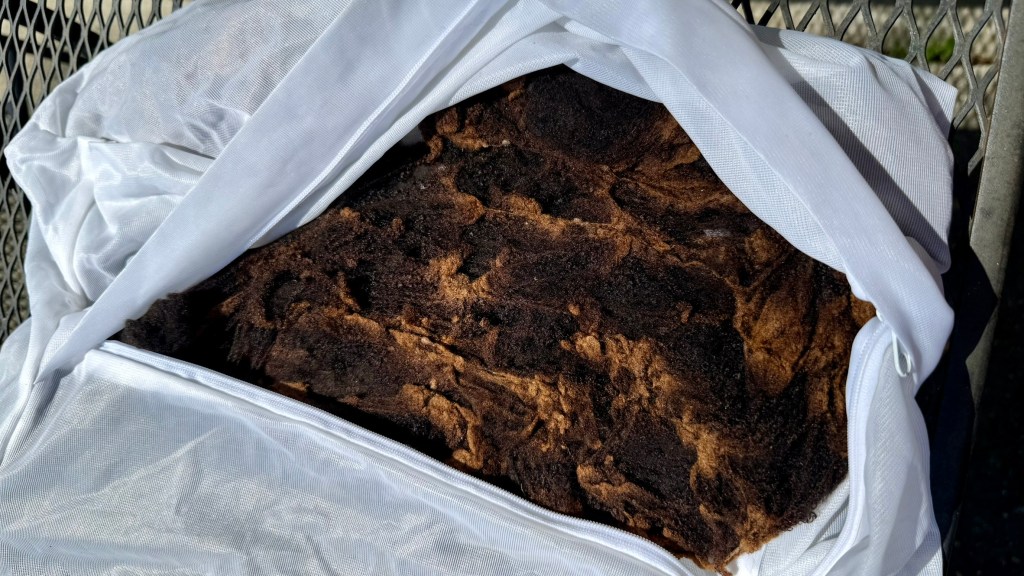
The second half of the fleece dried for about 3 hours outside before the threat of rain necessitated me bringing it inside to finish drying on a clothes drying rack overnight. The delicates bag helped to prevent the second half becoming as much of a stretched out cobweb, but the lock structure still disappeared. So, there’s no need for the flick carder I got, and I’m totally ok with this cloud thing for this super clean fleece.


Leave a comment