That fleece auction created a monster. First, I was obsessed with getting a raw fleece as a novelty, then I won the auction, got the fleece, and went through the process of scouring it in 90°F weather. I completely fell in love with the result and was able to start spinning with basically no fiber preparation. That fleece, a Shetland, came all the way from New York state to the Deep South. So, I started looking for local farms, and in doing so, discovered that there is actually a sheep breed native to the gulf area, the Gulf Coast Native, considered a rare North American breed, that arrived with the Spanish. These sheep later mixed with French and English breeds brought by new settlers and over the centuries adapted to the hot, wet climate. So, I started looking for some in Louisiana.
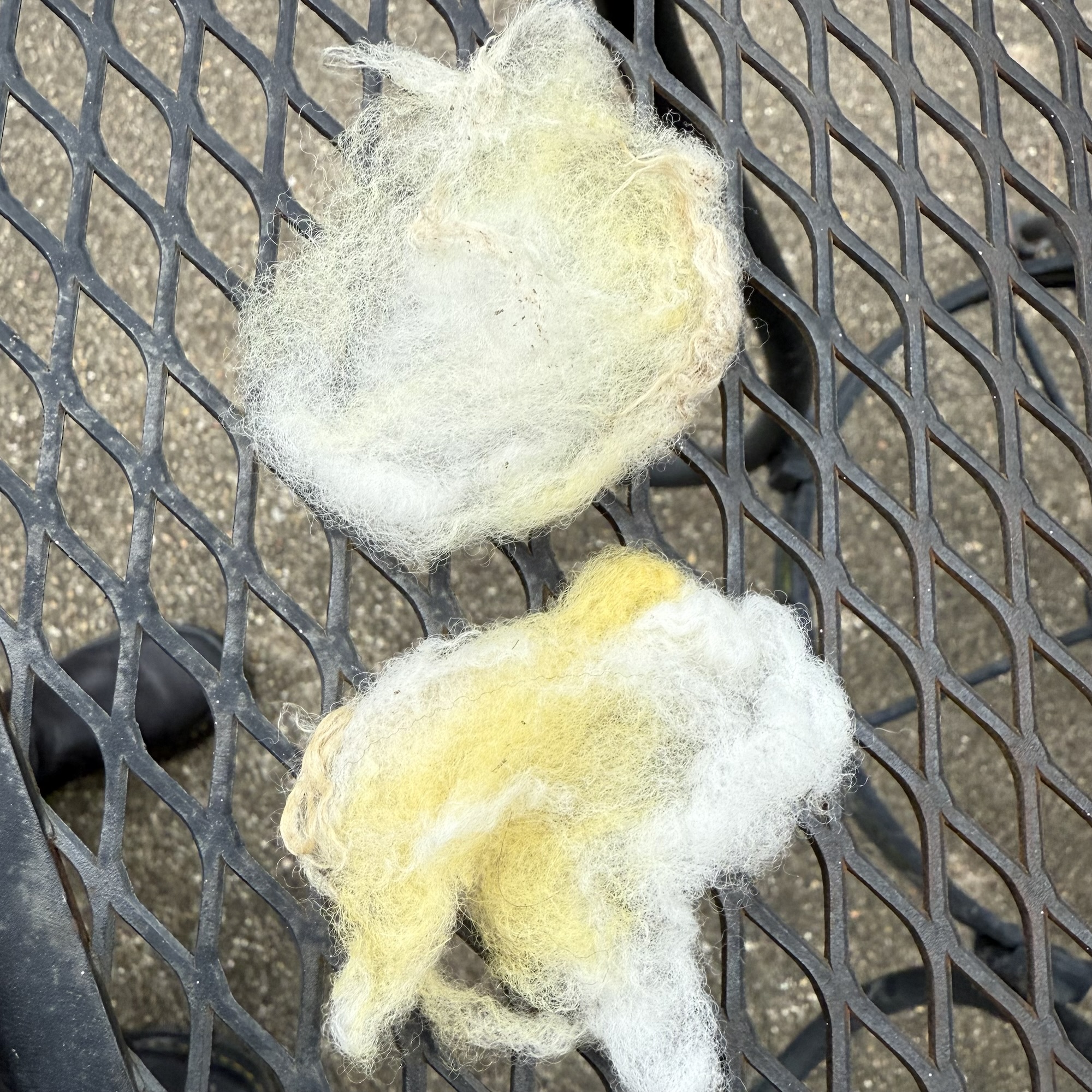
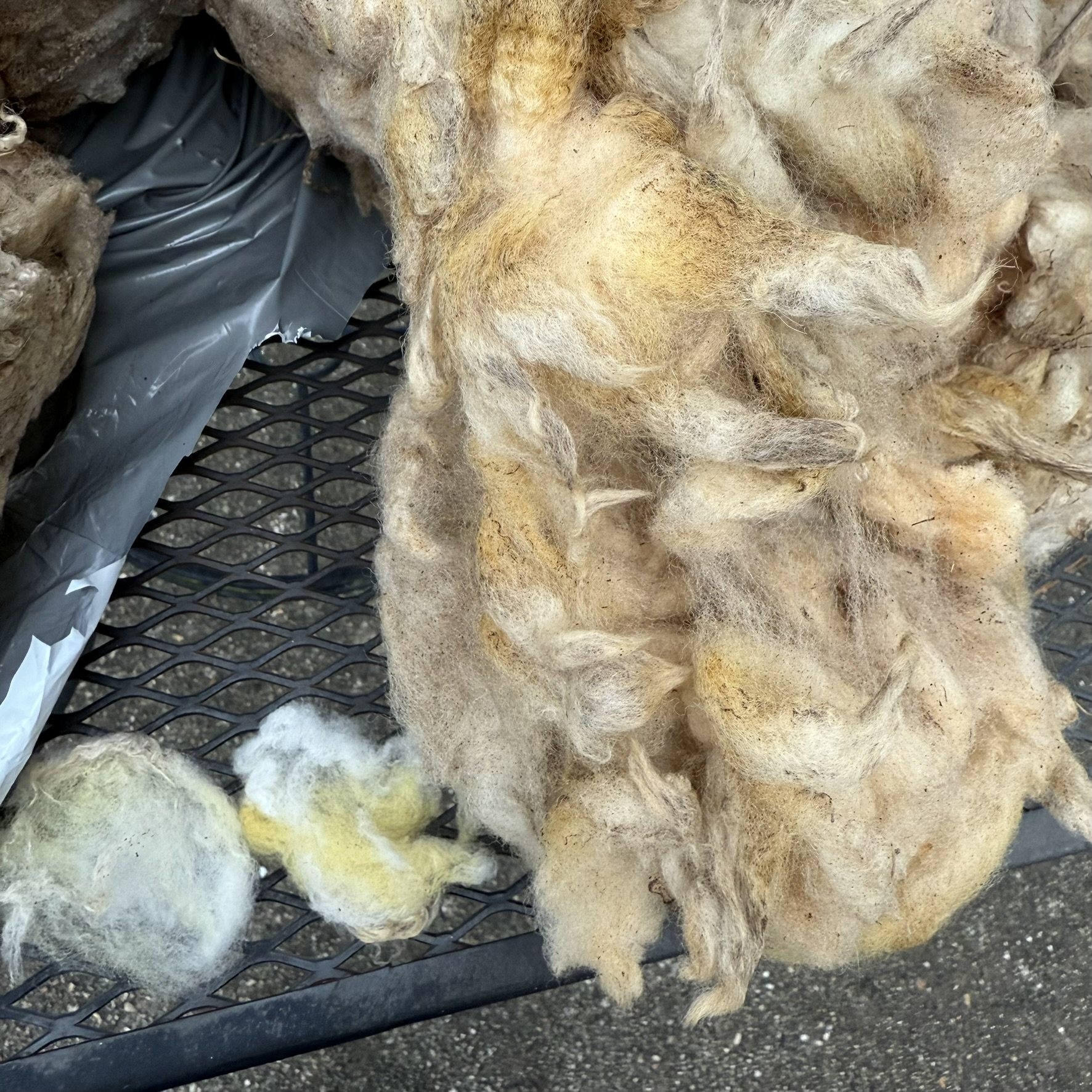
Google, in its current state, is useless. I found nothing. I searched Etsy for Gulf Coast Native raw fleeces. I found one vendor in Florida who sold me 2 lbs of raw wool. When I got it, the bag clearly contained the wool from two different sheep, which was not a huge problem, but what I found when I did a sample scour was. And so was the smell coming from the bag of wool. Canary staining is a sign of a bacterial infection in the sheep. It is resistant to dying and the texture of the yellow wool is often suboptimal. And OMG that wool reeked.
Completely unrelated to my Google search, I later found one very nearby (30 minutes away) seller on Etsy, but she only sells washed wool in smallish quantities, not raw fleeces. And it took her about 4 days to communicate that simple fact. Nor was she open to making local transactions.
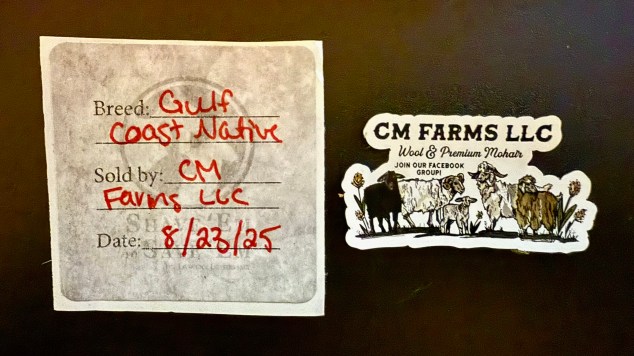
When I found some Gulf Coast Native fleeces in Facebook’s private Raw Wool for Sale group, I also found a seller of raw fleeces in Louisiana. CM Farms is 2.5 hours away from where I live, but in Louisiana. And fortunately, only 1 hour from where my father lives and willing to have a visitor on the farm to look at sheep fleeces. I had already claimed one for sale on FB when Allie invited me to pick it up at the farm instead of paying for shipping. CM Farms also participates in the Livestock Conservatory’s Shave ‘Em to Save ‘Em initiative, so I received my first sticker and signed up for the program as a fiber artist.
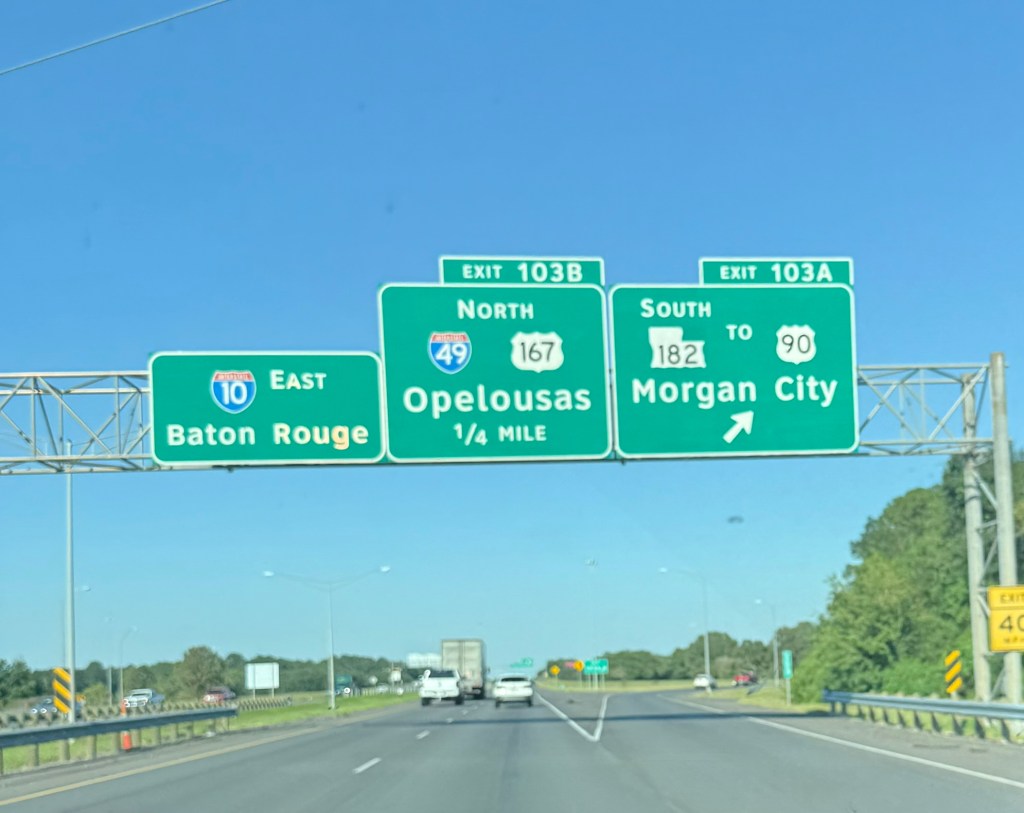
So, last Thursday, I’m sitting at home buying a fleece on Facebook, and by Saturday, I’m driving from the east end of the bottom part of the boot to the west end, with a stop to visit my father a little over halfway through. It was about 300 miles round trip, but it was so worth it. I left the farm with 2 white Gulf Coast Native fleeces, 1 brown-grey Gulf Coast Native, and 1 multicolored Harlequin.
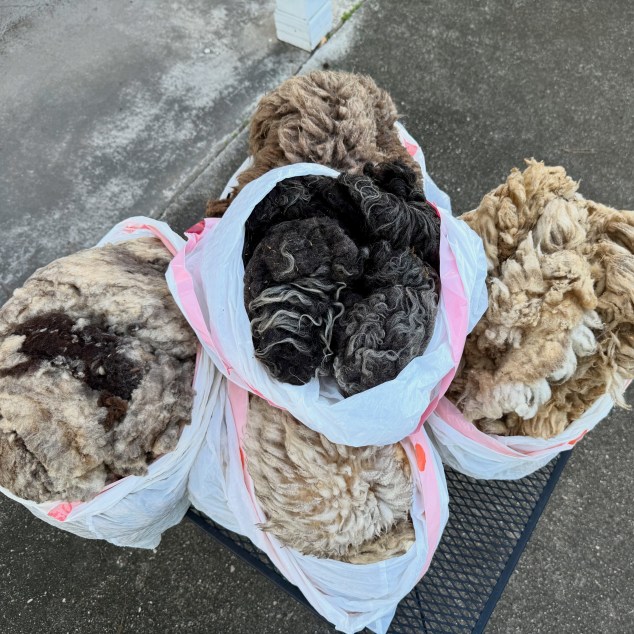
Well, I did not find a golden fleece waiting for me on a farm in southwest Louisiana, but I did find a reliable local vendor of lovely raw Gulf Coast Native fleeces and an invitation to come back around next year. And I am thrilled.


Leave a comment