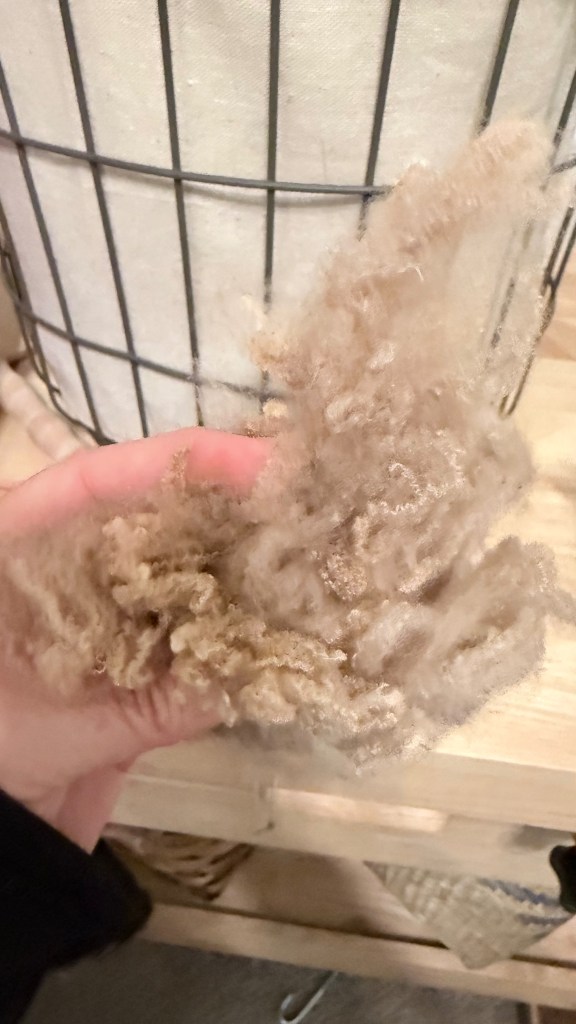
The first Gulf Coast Native white fleece I scoured last year was super dirty. There was (and still is) plenty of vegetative matter, but the tips were matted like very gross shag carpet before scouring. As you may already know, scouring doesn’t really solve the dirty tips problems when it’s bad. Apparently, rubbing them open lock by lock does. I certainly did and do not have time for that with a whole fleece. Seriously, I tried. No.
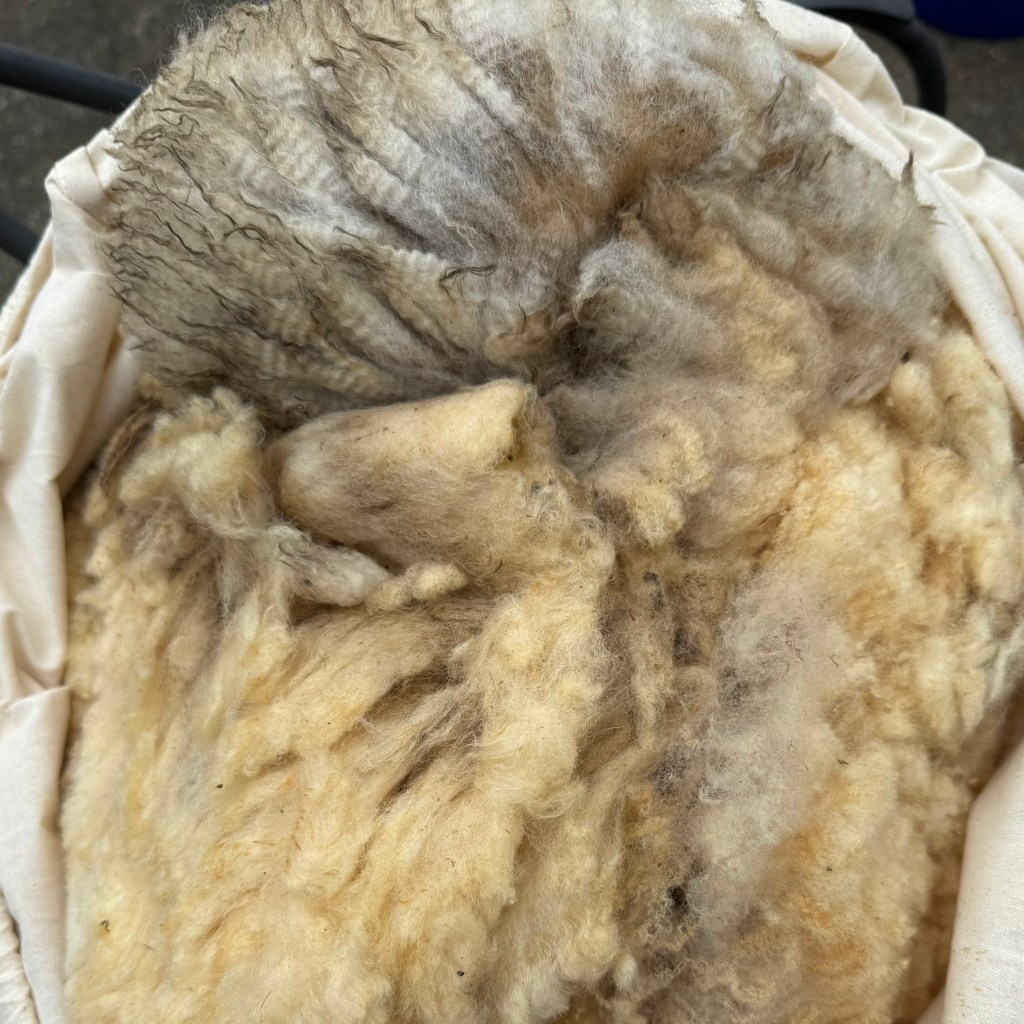
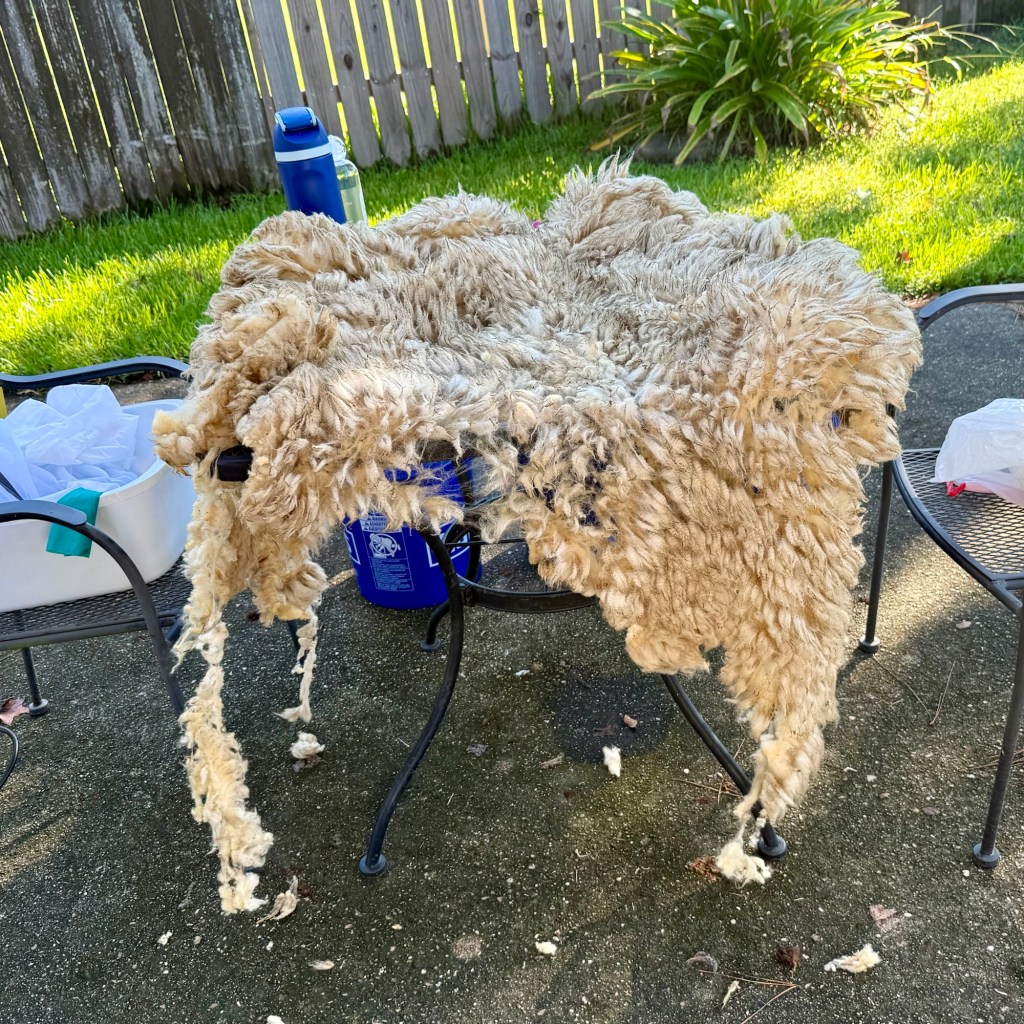
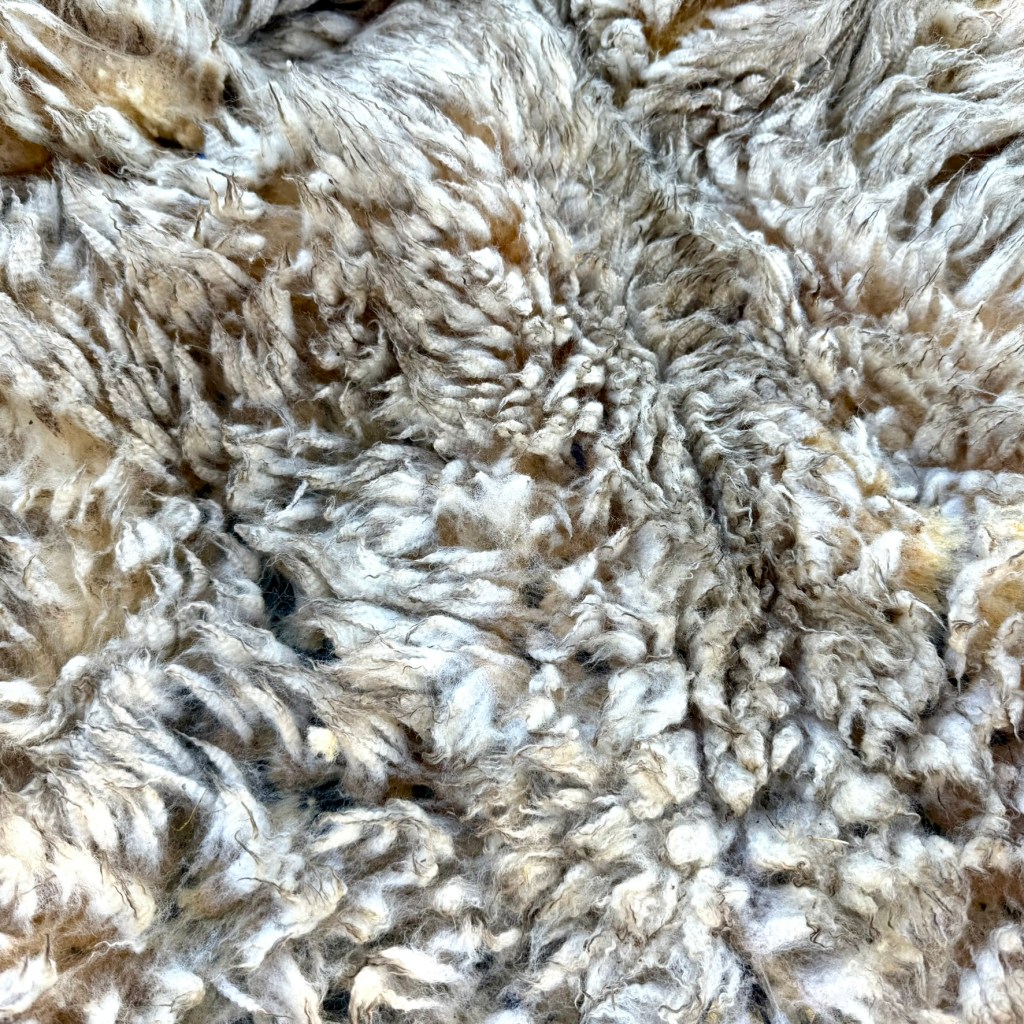
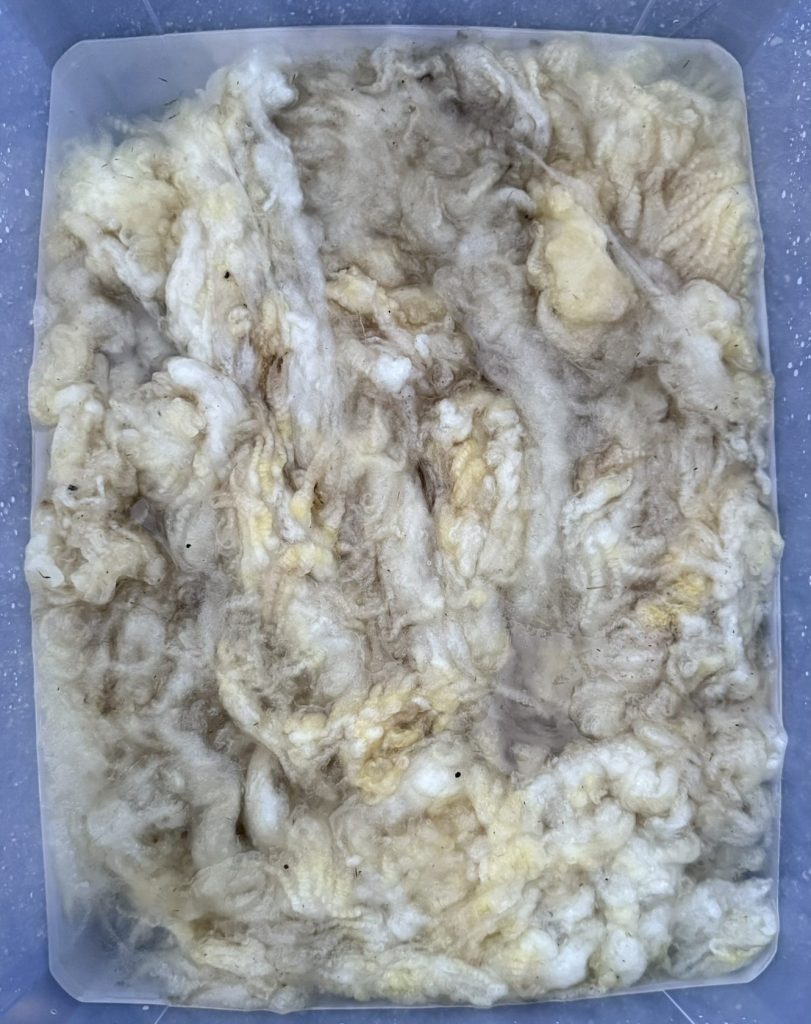
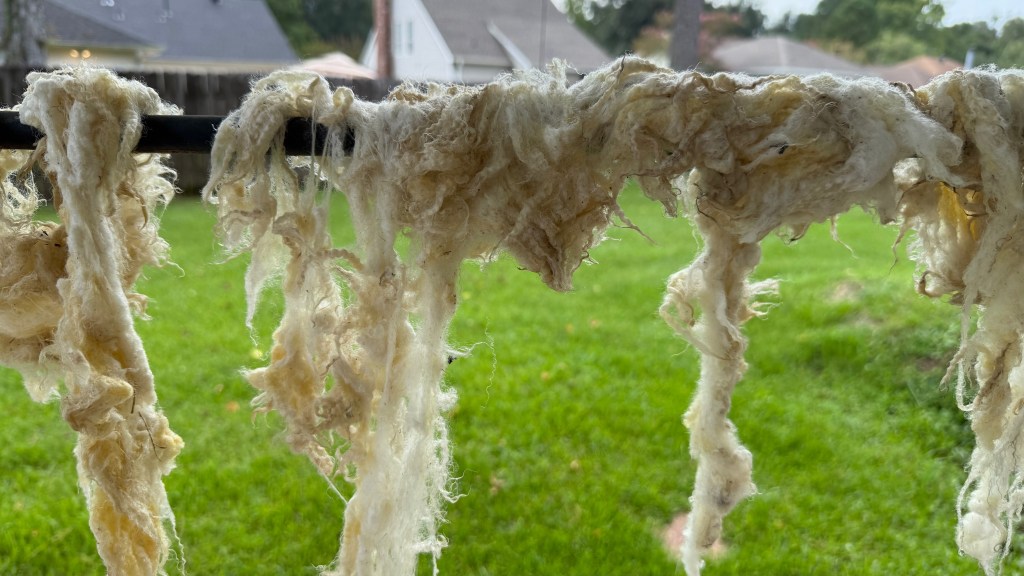
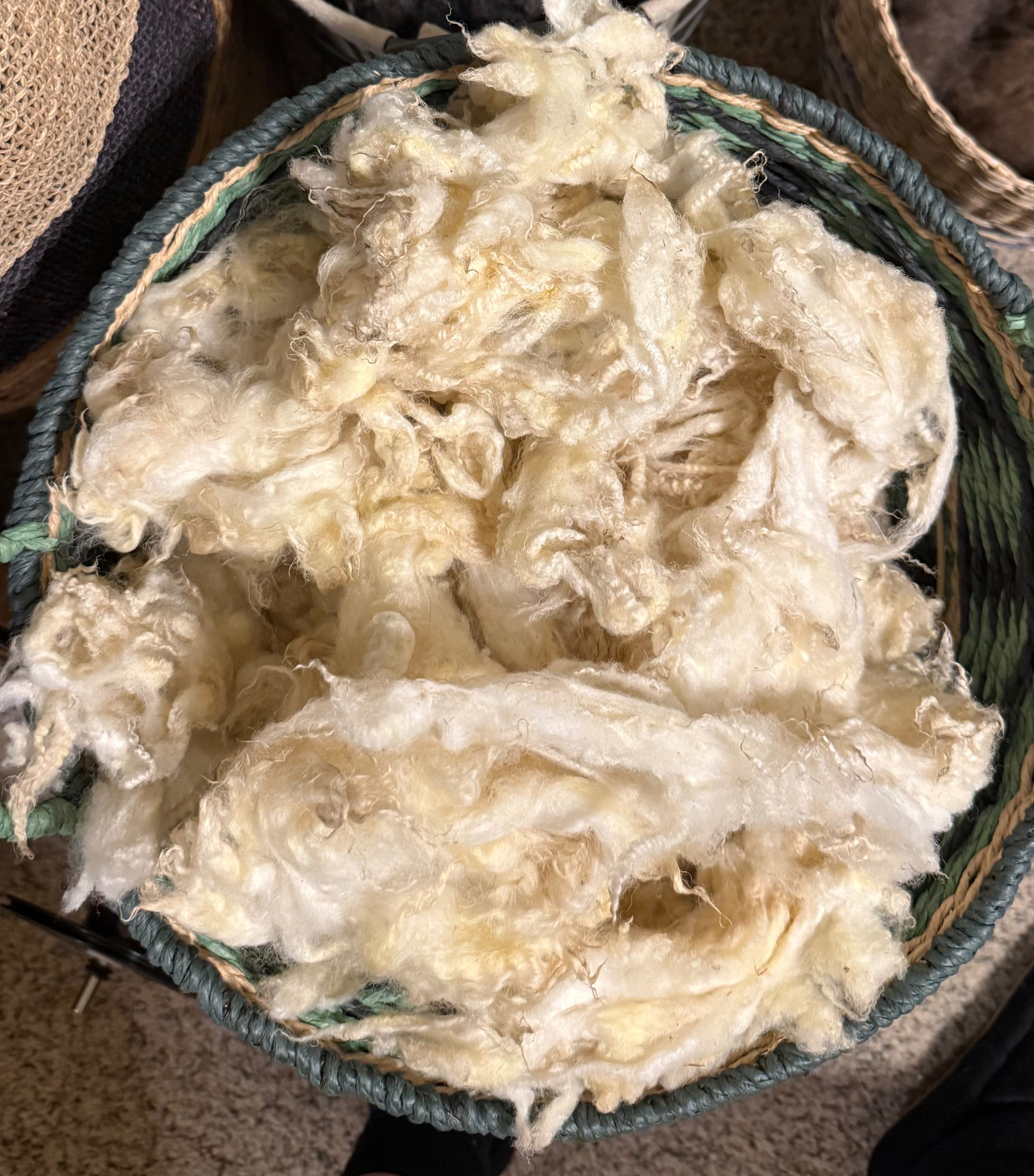
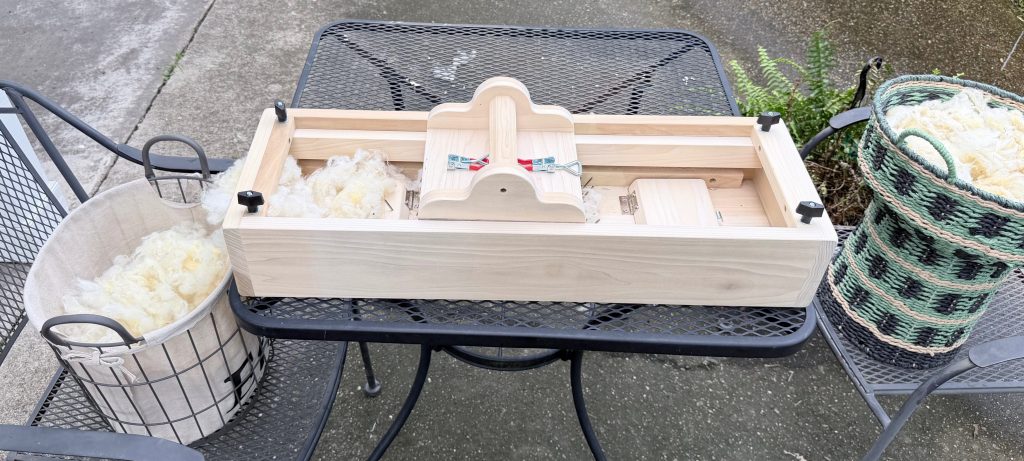
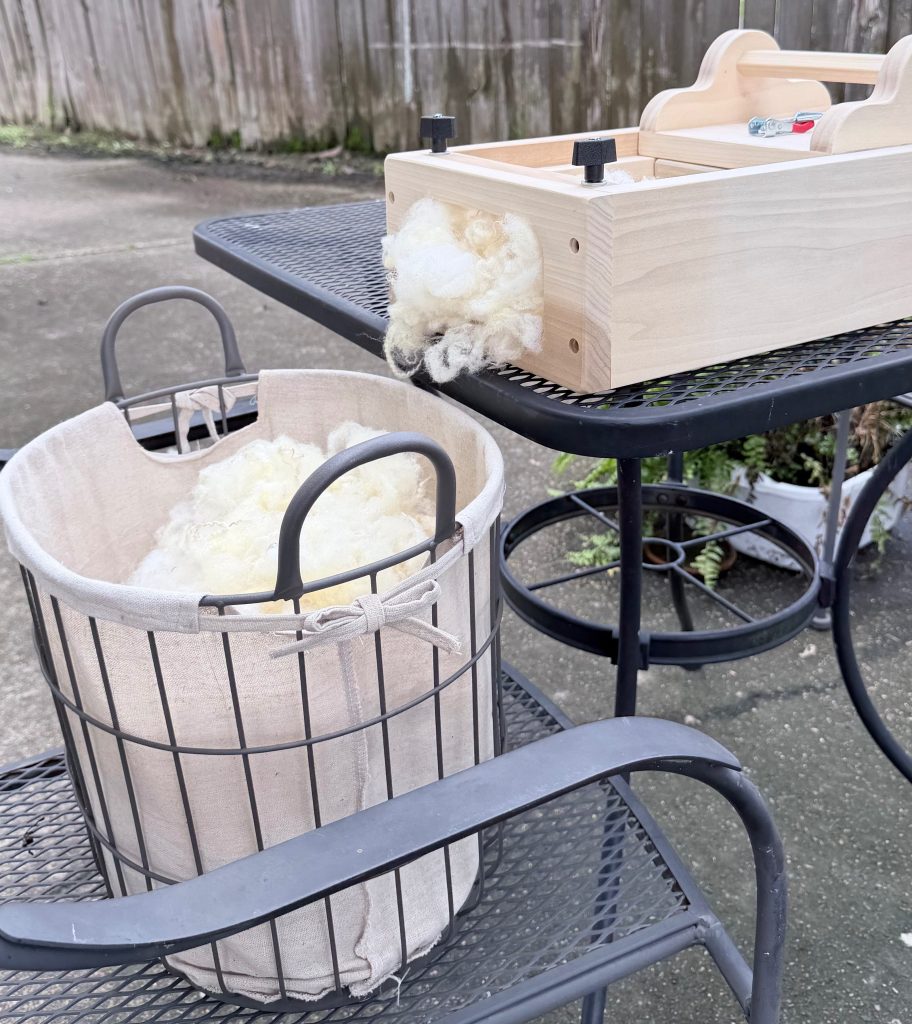
After scouring, the closed up black tips and tight locks were still there—cleaner, but still a problem. The locks were too short for combing. I tried using a flick carder (the locks are too small) and then hand cards (nope), which led me to buy a box picker specifically for this group of fleeces picked up relatively locally. Even after the picker, I had to then hand card a bit to open the locks up enough for the drum carder to do its work. In this painful way, I learned that cheap fleeces may not cost as much money initially, but they cost quite a bit in proper equipment, time spent learning, and expended labor.
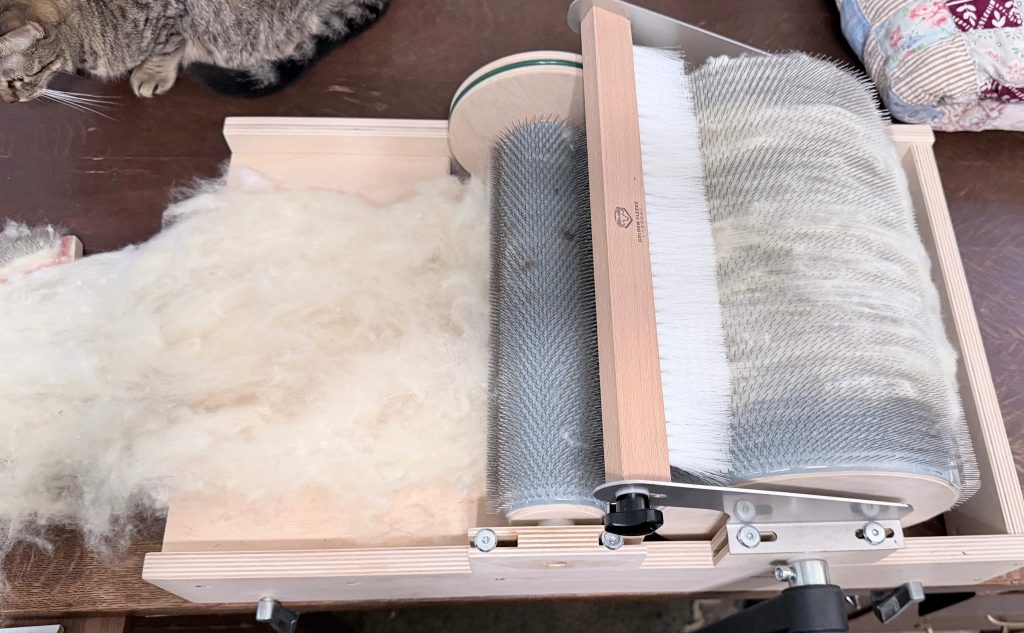
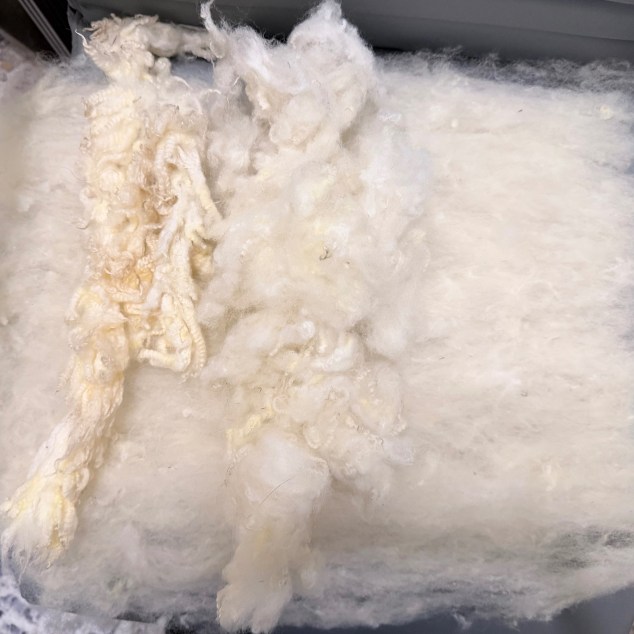
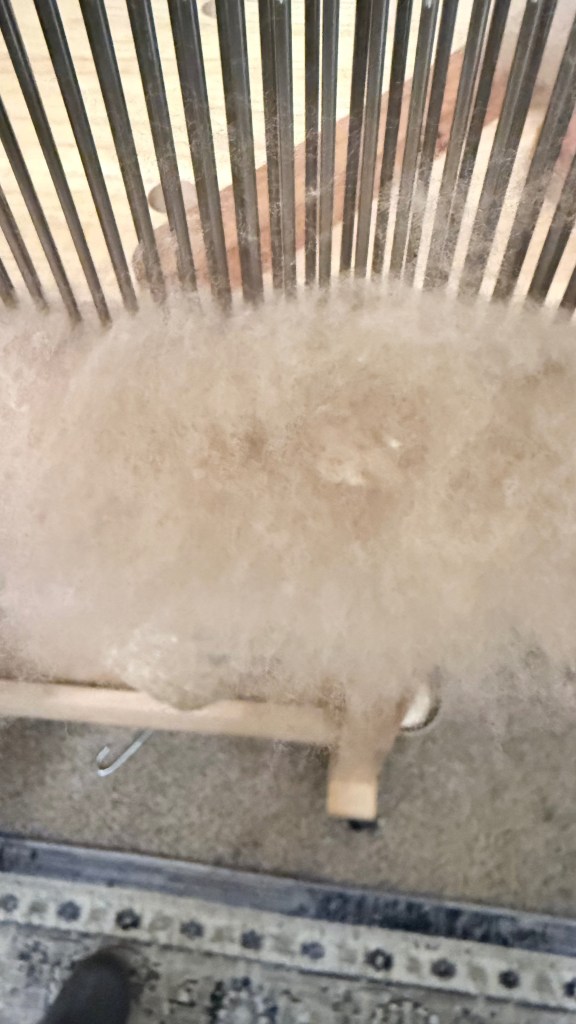
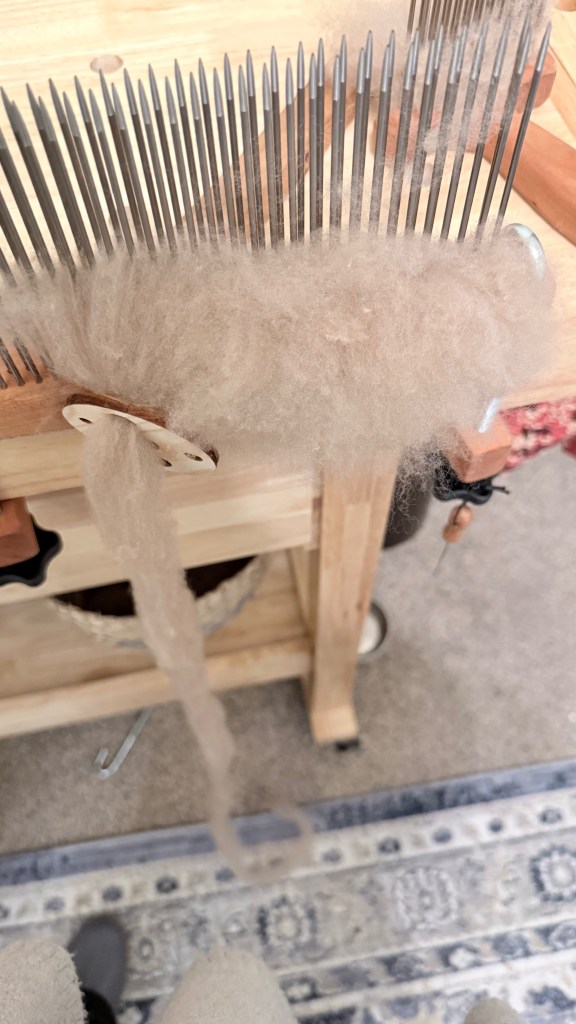
In the image below, to the left is the first white Gulf Coast Native fleece after scouring. In the middle is the same fleece after going through the box picker. To the right, the fleece has been partially hand carded then run through the drum carder twice. It is still not ready for spinning. It needs more work. I have two batts so far, and the one below is the better of the two. I definitely need to hand card the fleece before moving to the drum carder to make the batts.
Last August, I paid $25 for this 2.5 lb. lightly skirted Gulf Coast Native fleece. But I also paid $155 for hand cards, $145 for a hackle and comb kit (not usable for this fleece), $675 for a drum carder, and finally $250 for a box picker. And about $100 for a workbench for all this equipment and a surface to use it on.
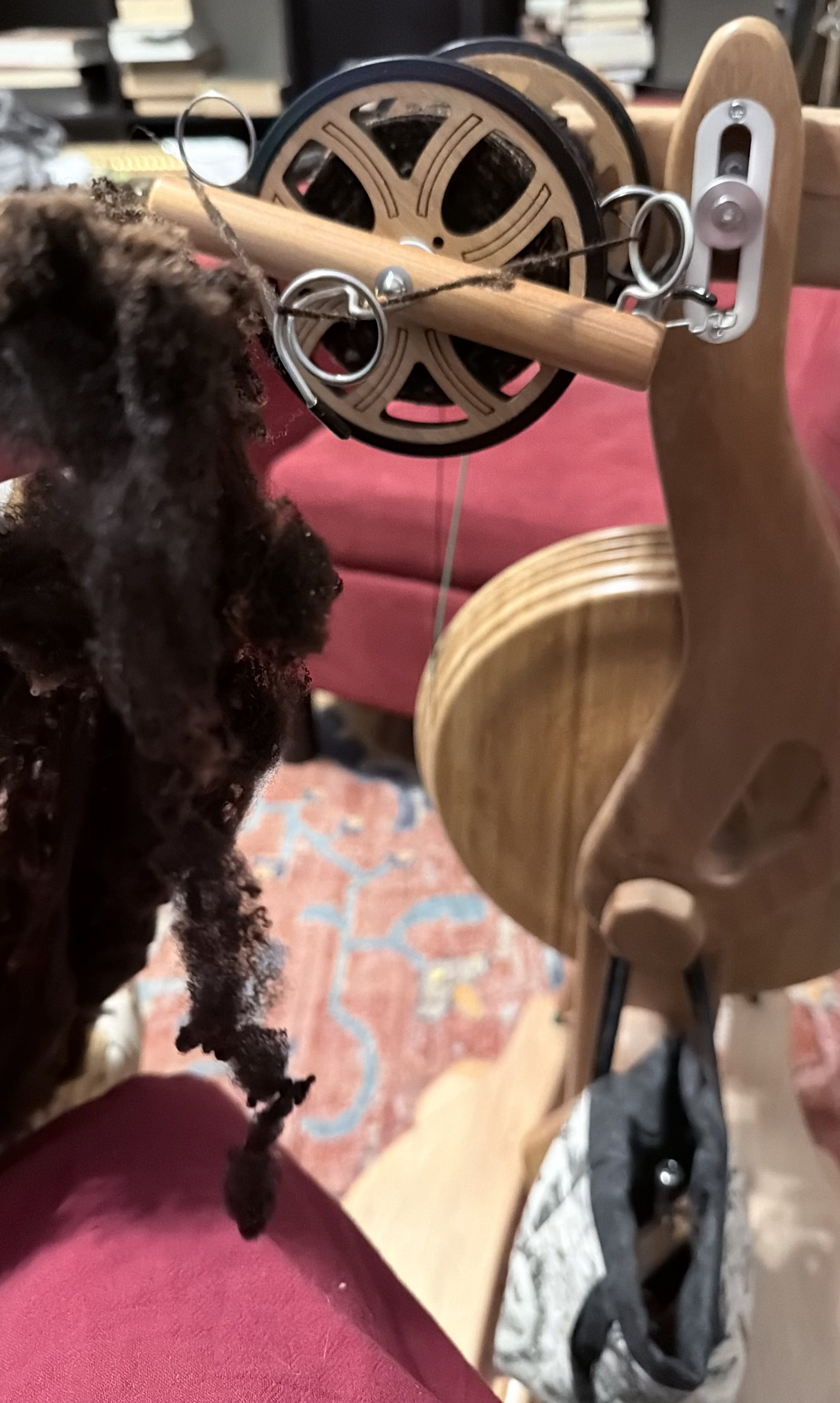
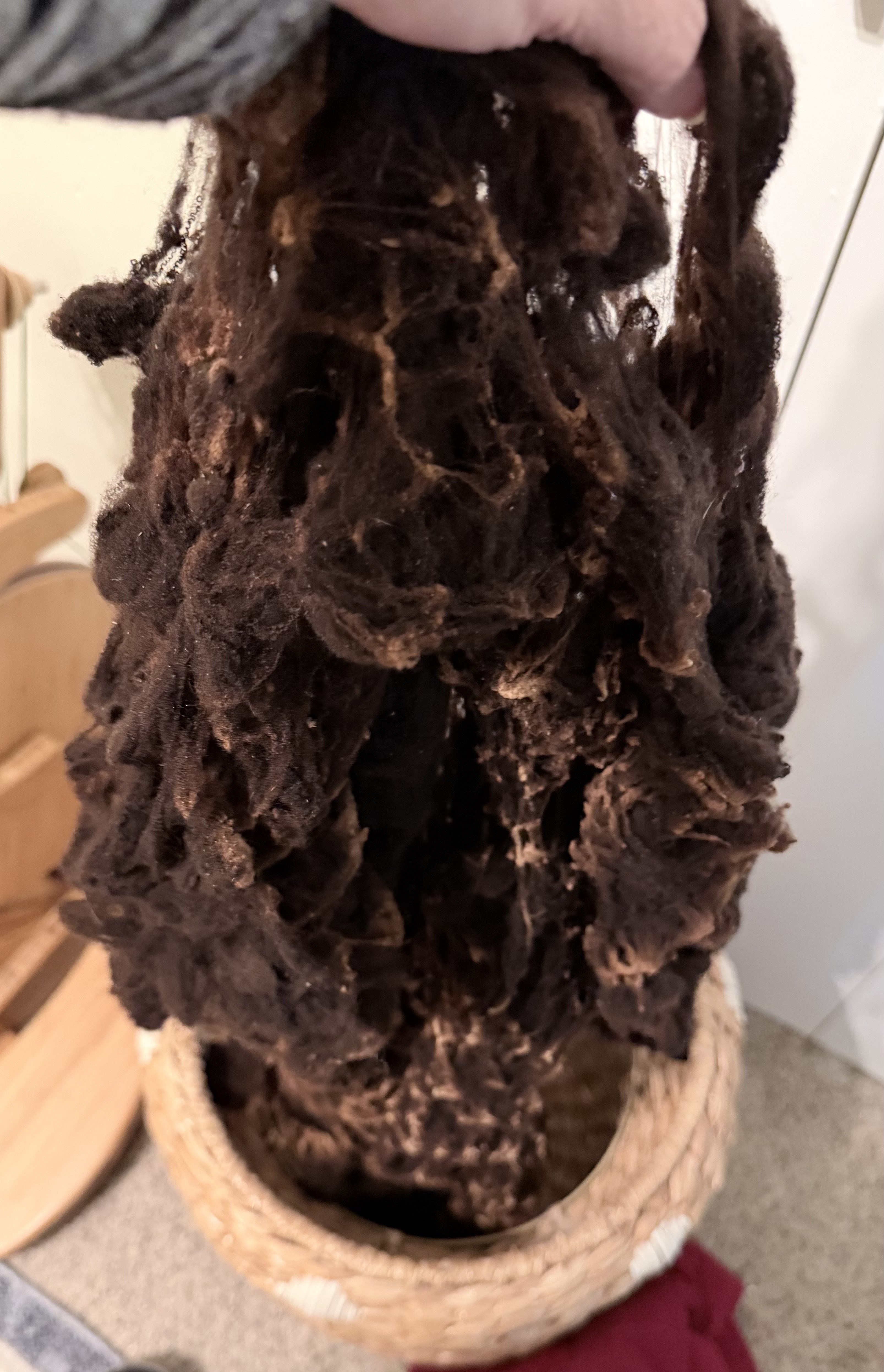
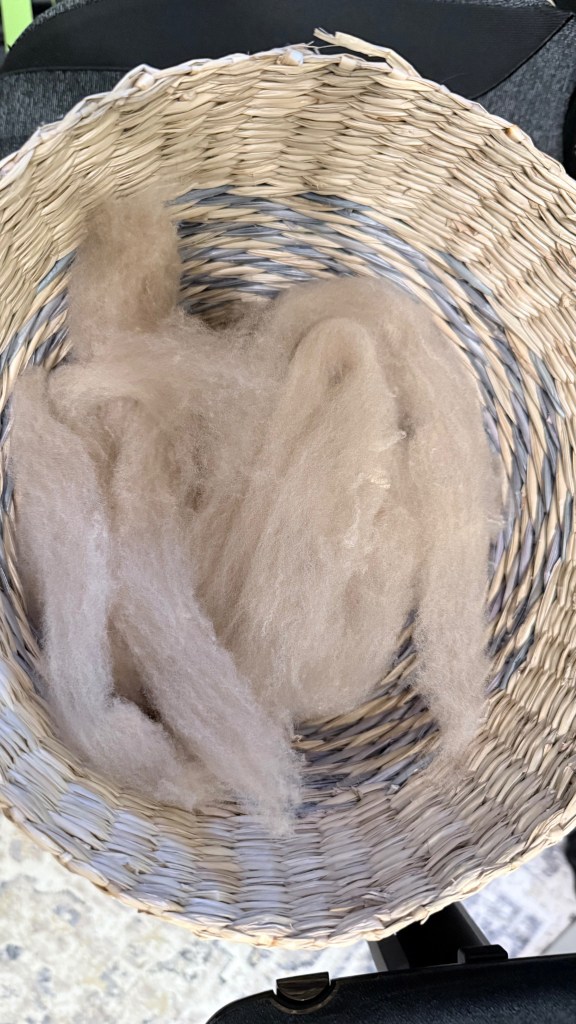
Earlier that August, I paid $225 for Elektra’s coated 2 lb. heavily skirted Shetland fleece. I bought the flick carder for $68, but didn’t even use it on that fleece. I have been spinning it with no other processing than scouring. I bought a $25 basket to store it in and a $12 apron to catch the minimal VM as I spin.
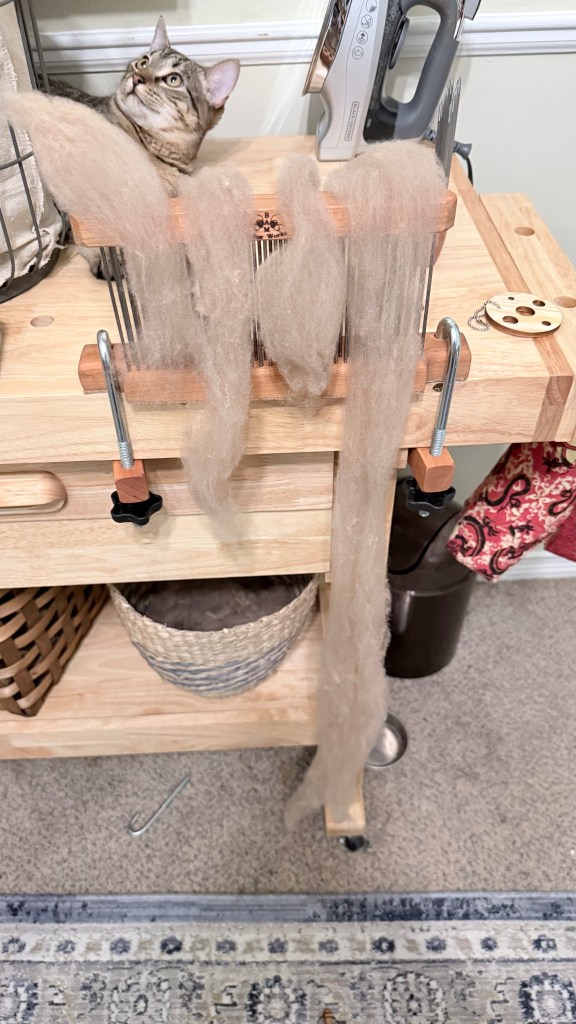
After struggling just to scour these local cheap fleeces during August, I bought a 4 lb. coated Merino fleece for $127 through Etsy at the beginning of September. It scoured easily and is beautiful. The staple is long enough to put through the hackle and combs, and it dizzed off like a dream.
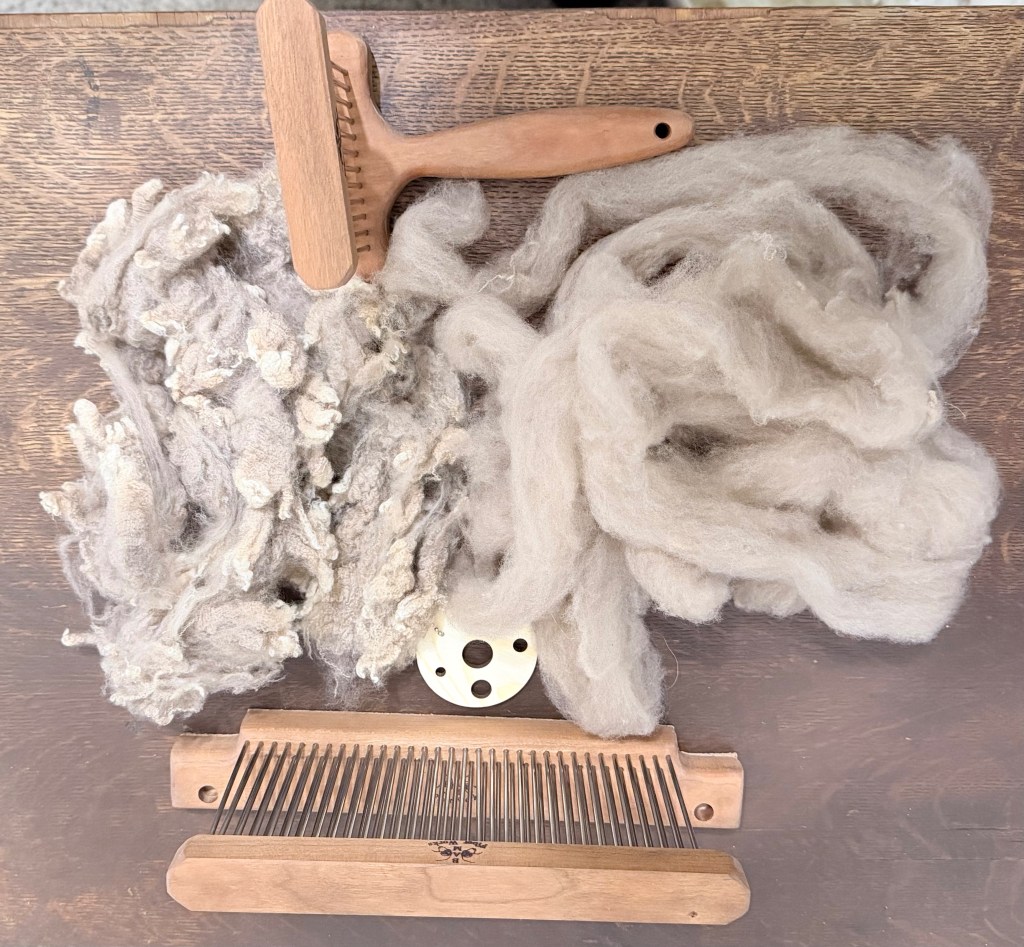
The takeaway for anyone starting out without a fiber room full of gear: Buy the expensive coated fleeces from reputable farms. Pay the premium upfront. The cheap fleece that started all this cost $25; the equipment I needed to process it came to about $1,250. The woman who sold it to me eventually sold her whole flock—she didn’t have the time. Apparently I did.
I could have used these fleeces as garden mulch and called it a lesson. Instead I now have a box picker, a hackle and comb kit, hand cards, a drum carder, quite a bit more knowledge than when I started, and a working theory of what I am: an accidentally very invested sheep enthusiast.


Leave a comment